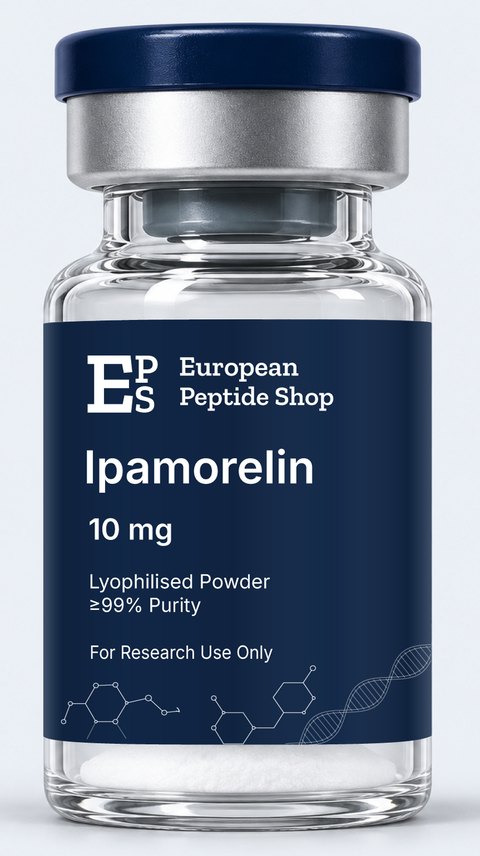
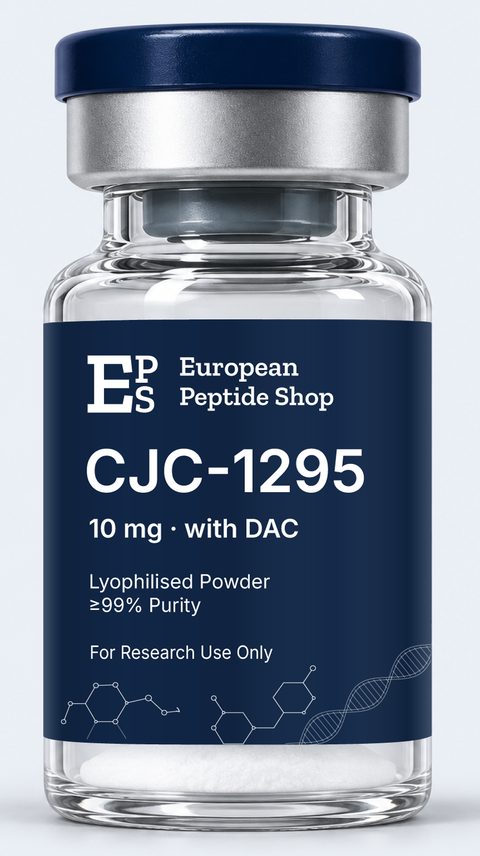
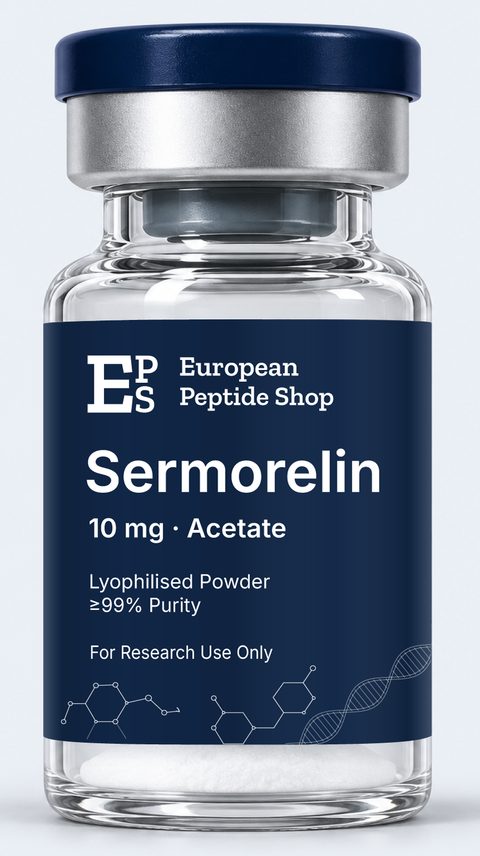
Ipamorelin, CJC-1295 and sermorelin
These names do not identify the same peptide
Ipamorelin, CJC-1295 and Sermorelin appear together in discussions of growth-hormone-related research, but a shared research context does not make them interchangeable. Their sequences, modifications and receptor relationships must be kept separate when interpreting a paper or a product record.
Sermorelin denotes the amidated GHRH/GRF 1–29 fragment, as recorded in the FDA substance identity database. Ipamorelin is a structurally distinct pentapeptide secretagogue. CJC-1295 terminology needs additional care because catalogue descriptions sometimes use “no DAC” for modified GRF 1–29, while the original long-acting CJC-1295 literature concerns an albumin-binding modification.
What the primary papers actually studied
Raun and colleagues' 1998 Ipamorelin paper describes its structure and pharmacology in experimental systems. It is not a study of a mixed commercial vial.
Jetté and colleagues' 2005 CJC-1295 study describes modified GRF 1–29 derivatives with an albumin-reactive group and work in cell and rat models. That modification is a defining part of the molecule studied. The 2006 study by Teichman and colleagues then examined a long-acting CJC-1295 preparation in healthy adults. Its reported persistence cannot be assigned to a no-DAC catalogue material by shortening the name to “CJC”.
These sources identify particular molecules and preparations. They do not establish outcomes, equivalence or administration guidance for the PCUK listing.
A practical identity comparison
| Name on a record | Detail to establish before comparing it |
|---|---|
| Sermorelin | Exact GHRH fragment and terminal form |
| Ipamorelin | Compound identity, sequence or reference identifier and supplied form |
| CJC-1295 with DAC | Whether the albumin-binding modification is explicitly specified |
| CJC-1295 no DAC | The actual modified GRF identity, without assuming the DAC study preparation |
| CJC/Ipamorelin blend | Both component identities, their labelled amounts and the combined quantity |
The no-DAC identity guide covers the naming issue in more detail. A certificate that says only “CJC/IPA” needs enough additional context to tie its target definitions to the material supplied.
Reading the PCUK blend listing
The CJC-1295 no DAC + Ipamorelin 10mg listing describes a combined research material. Read its component specification and report together. The total quantity is not the quantity of each component, and a blend is not the same procurement format as separate vials.
An analytical report should state which components were identified or quantified and how the results are expressed. A single unexplained percentage cannot answer every composition question. The HPLC guide and COA guide distinguish those measurements. Use the current product page for availability rather than assuming a standalone compound is stocked because it appears in this comparison.
EPS documentation
Use the research catalogue to check the exact name, labelled amount and format. The COA library publishes the original Janoshik reports selected for EPS, retaining the original report client name and any missing batch fields. Literature findings and another supplier's analytical results are not evidence about an EPS batch.