BPC-157 research explained
BPC-157 is a peptide discussed in studies of tissue responses and repair-related processes. Many widely repeated claims come from cell and animal work. To judge a claim, check the actual study setting, material and outcome rather than treating a headline about recovery as a demonstrated personal benefit.
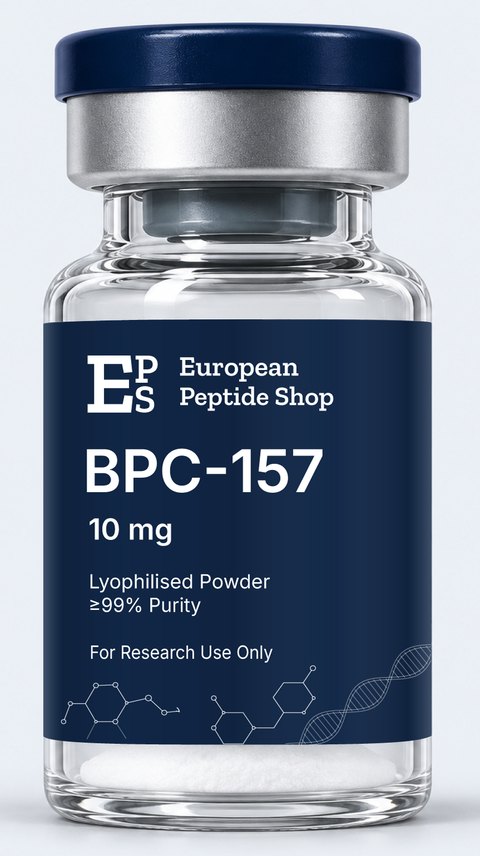
This guide separates three questions: what BPC-157 is, what the studies measured and what a product label or report can verify. A 10mg label states an amount of material; it does not establish a treatment, schedule or expected result.
What exactly is the material being discussed?
BPC-157 is a common compound name, not a complete analytical specification. A research record should also identify the sequence, chemical form, lot and measured quantity. Claims about a particular preparation should not automatically be extended to every material sold under the same name.
The FDA's 2026 BPC-157 briefing document discusses characterization and naming issues, alongside the limited clinical evidence and safety questions. Its consideration of compounding is a separate process from approval of a drug product.
What did the tendon studies actually find?
A 2003 rat Achilles-tendon study used injury models and biomechanical, microscopic and macroscopic assessments. Such work can investigate repair processes under controlled conditions, but the model is not a clinical trial in people with tendon pain.
In a 2011 study of tendon outgrowth and fibroblasts, investigators examined cell survival, migration and FAK/paxillin signaling. These are defined laboratory endpoints that can support mechanistic hypotheses.
A faster cell-migration response is not the same outcome as restored tendon strength or improved daily function. When reviewing a paper, keep the species, injury model, comparator and measured endpoint attached to the result. This prevents a mechanistic observation from turning into an unsupported recovery promise.
Does a proposed mechanism prove a real-world benefit?
A 2014 experiment in rat tendon fibroblasts reported increased growth hormone receptor expression and investigated responses after growth hormone stimulation. The material, cellular context and additional stimulus were part of that experiment.
This does not establish that BPC-157 raises growth hormone in people or produces a general tissue-repair effect. Receptor expression, downstream signaling, cell proliferation and whole-tissue function are different measurements. A useful mechanistic explanation states which of them was actually tested.
What can the available human evidence establish?
Small uncontrolled reports and retrospective observations can identify questions for further study. They cannot reliably separate an intervention's effect from natural recovery, other treatments, selection bias or expectations. Large claims need appropriately controlled evidence and adequate safety follow-up.
For gut-related claims, check that the source actually studied the relevant disease and population. A stomach-related origin story or an animal injury model does not prove a treatment effect in human ulcerative colitis. The FDA briefing provides a dated primary regulatory assessment of those evidence gaps.
Similarly, research on two compounds separately does not establish that a combination is synergistic. Any combination claim needs a comparison that can distinguish the individual components from the combined intervention.
What does BPC-157 10mg mean on a label?
The 10 mg description is the nominal vial quantity. It is not a biological-effect measurement or a concentration until a laboratory preparation is defined. Evaluate identity, chromatographic purity and quantitative content separately; one attractive percentage does not answer all three questions.
Does evidence for one ingredient prove a BPC-157 blend works?
No. A blend changes the material under discussion. Studies of standalone BPC-157 do not automatically establish the effects, safety or performance of a mixture containing TB-500 or other components.
Where can I compare price and testing?
The BPC-157 10mg price guide explains labelled cost per mg. For the evidence attached to a particular listing, use its batch report and how to check a lab report. Price and a testing badge cannot replace the study or product distinctions above.
EPS documentation
Use the research catalogue to check the exact name, labelled amount and format. The COA library publishes the original Janoshik reports selected for EPS, retaining the original report client name and any missing batch fields. Literature findings and another supplier's analytical results are not evidence about an EPS batch.