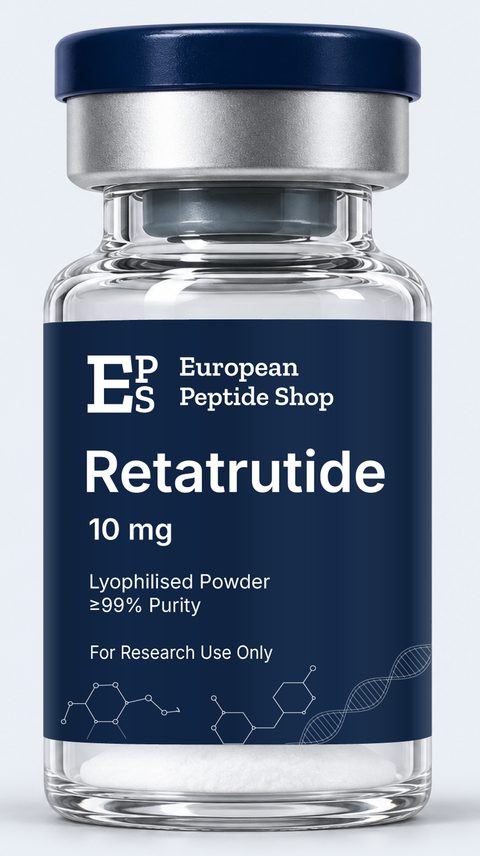
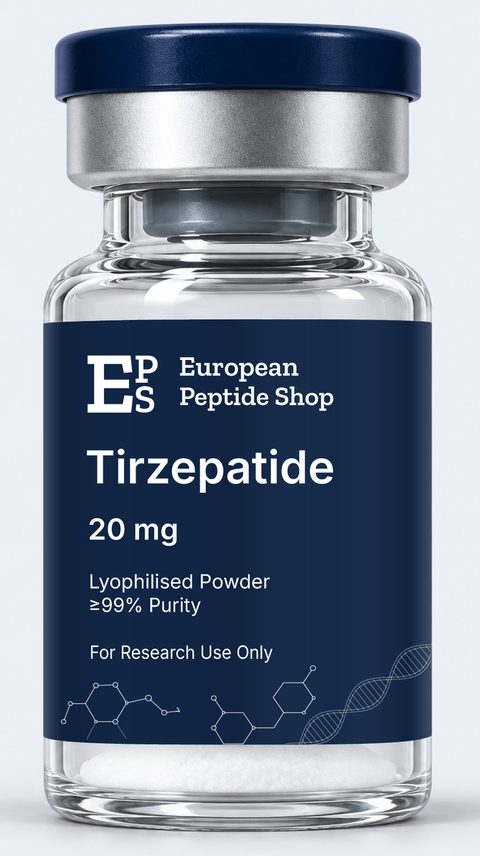
Retatrutide, tirzepatide and semaglutide
Semaglutide, tirzepatide and retatrutide differ in the receptors they target and in their development and product status. Semaglutide targets GLP-1, tirzepatide targets GLP-1 and GIP, and retatrutide targets those two plus glucagon. More targets does not, by itself, establish which option is appropriate for a person.
The cited FDA guidance states that retatrutide is not a component of an FDA-approved drug and has not been established as safe and effective for any condition. The agency also distinguishes approved medicines from unapproved GLP-1 products. FDA’s current GLP-1 information.
Which receptors does each compound target?
| Compound | Receptor activity | Research distinction |
|---|---|---|
| Semaglutide | GLP-1 | Single incretin-receptor agonism |
| Tirzepatide | GIP and GLP-1 | Dual incretin-receptor agonism |
| Retatrutide | GIP, GLP-1 and glucagon | Triple agonism that adds a glucagon-receptor component |
Receptor activity is more complex than counting targets. Potency at each receptor, exposure and the experimental model influence the response. The original LY3437943 characterization describes retatrutide's pharmacology and early development. It does not justify a simple chart labeling human energy expenditure as low, medium or high across these three compounds.
What did the direct tirzepatide and semaglutide comparison show?
SURMOUNT-5, published in 2025, randomized 751 adults with obesity but without type 2 diabetes in an open-label comparison. At 72 weeks, the reported mean percentage weight change was −20.2% with tirzepatide and −13.7% with semaglutide under the study regimens. Gastrointestinal events were the most common adverse events in both groups.
This is stronger evidence for that specific comparison than combining unrelated trials. Its population, duration and treatment conditions still matter. It does not establish the same difference for every patient population, every formulation or every endpoint.
What has been reported about retatrutide in September 2026?
The peer-reviewed Phase 2 obesity study included 338 adults and reported a mean weight reduction of 24.2% in the highest studied treatment group at 48 weeks, compared with 2.1% with placebo. Gastrointestinal adverse events and increases in heart rate were among the reported findings. Neither tirzepatide nor semaglutide was the comparator.
In a May 2026 TRIUMPH-1 sponsor announcement, Lilly reported 28.3% mean weight loss at 80 weeks in the highest studied group. This is a Phase 3 sponsor-reported result, a different evidence source from the published Phase 2 paper. Read the stated estimand, treatment discontinuations and safety findings alongside the headline percentage.
The FDA's current GLP-1 information identifies retatrutide as unapproved. Trial milestones and press releases are not marketing approval.
Can weight-change percentages from different trials be ranked?
A 48-week result and an 80-week result answer different questions. Baseline weight, diabetes status, treatment exposure, comparator choice and missing-data methods also affect the result. A comparison should state whether the number reflects participants regardless of treatment discontinuation or estimates outcomes under a treatment-adherence assumption.
Separate body weight from body composition as well. A change on the scale does not specify how much visceral fat, subcutaneous fat or lean tissue changed. The inflammation and visceral-fat guide explains why imaging and biomarker endpoints need their own interpretation.
Which details should I check before comparing study results?
Does triple agonism prove greater resting energy expenditure in humans? Receptor pharmacology supports studying that hypothesis; a weight-loss percentage alone does not measure it.
Do approved semaglutide and tirzepatide medicines validate research products? No. Approval attaches to evaluated drug products and manufacturing specifications. It does not transfer to an independently supplied material with a similar compound name.
Does a three-receptor mechanism automatically mean better results?
No. Receptor activity is one part of understanding a compound. Benefits, adverse effects, eligibility and clinical outcomes need evidence from the actual product and study population.
Can I compare a research vial’s price with a prescription plan?
A prescription service, an approved medicine and a laboratory catalogue listing are different arrangements. A catalogue price cannot establish a treatment cost or suitability for personal use.
EPS documentation
Use the research catalogue to check the exact name, labelled amount and format. The COA library publishes the original Janoshik reports selected for EPS, retaining the original report client name and any missing batch fields. Literature findings and another supplier's analytical results are not evidence about an EPS batch.