Reading a Semax purity report
A Semax HPLC purity result is a method-dependent analytical measurement. When expressed as a peak-area percentage, it compares the signal assigned to Semax with the signals included in the calculation. It is not automatically the mass fraction of the complete vial contents.
Read the method and sample identity alongside the number. A result from another supplier or another batch does not establish a result for an EPS listing.
Check the material identity
PubChem identifies Semax as a defined synthetic peptide. Match the exact material name and chemical form with the report. An acetylated derivative, another sequence or a mixture needs its own specification.
Mass spectrometry can provide evidence about molecular mass, while chromatography provides separation under the stated method. Agreement with an expected mass is useful evidence, but it is not a blanket guarantee of sequence, purity or every other property. Read the laboratory's stated conclusion and limitations.
Separate three measurements
| Field | What it describes |
|---|---|
| Labelled amount | The nominal quantity shown for the vial |
| HPLC area percentage | Relative detector response under the reported method |
| Quantitative content | An amount established by a suitable quantitative assay |
Water, counterions and other constituents complicate any attempt to equate these fields. Multiplying a label amount by a peak-area percentage does not create a measured milligram result.
Review the batch documentation
Record the sample identifier, lot, analysis date, method and units. Check the issuing laboratory's verification process where available. If the method or sample relationship is missing, record the question and ask for clarification.
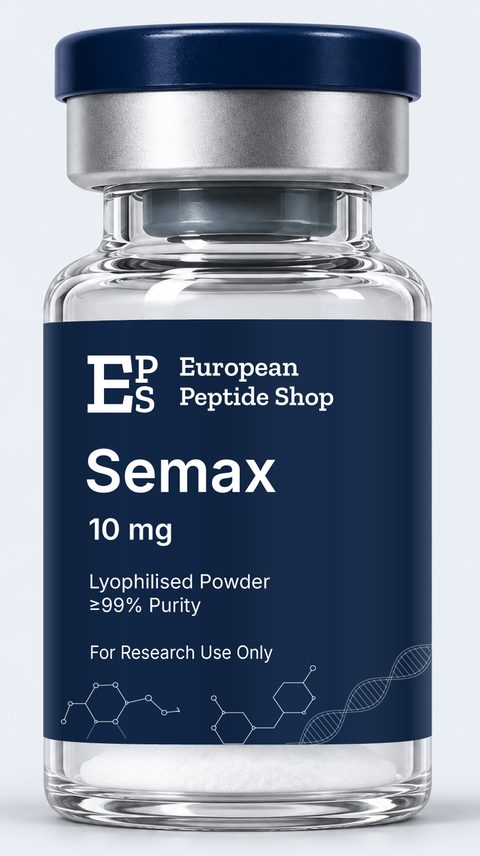
The Semax 10 mg listing identifies the EPS format. The linked product page provides its selected original Janoshik source report, including the printed client, batch and results. This does not establish that EPS has received or released matching physical stock.
Use the COA checklist for the full document review and the HPLC guide for the difference between chromatographic response and content. Keep the original document with the review record so another reader can repeat the check.