Mitochondrial research
5-Amino-1MQ
Ordering opens later. Prices and availability are not yet published.Details
Mitochondrial research
Ordering opens later. Prices and availability are not yet published.
Ordering opens later. Prices and availability are not yet published.
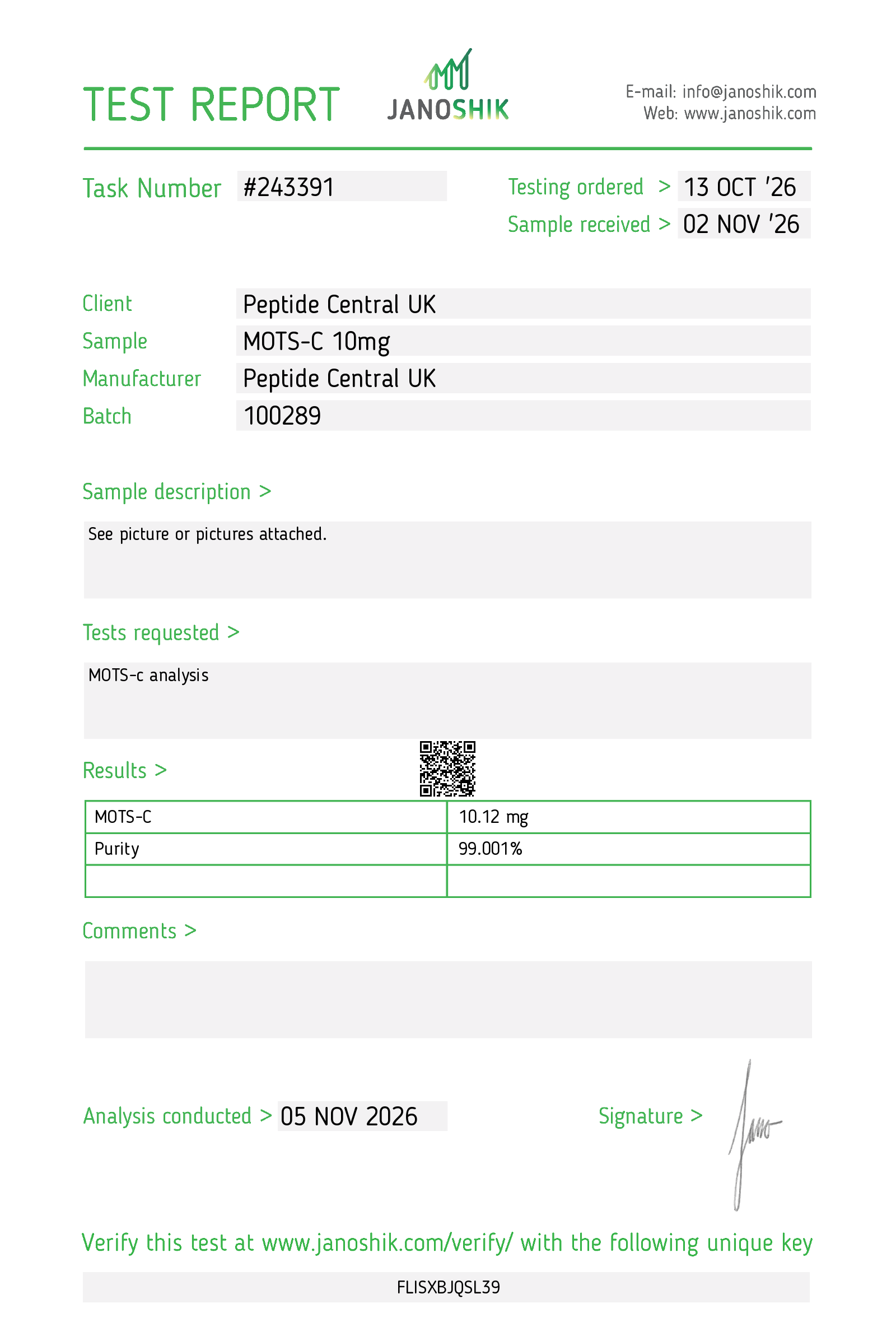
Batch 100289 · Janoshik #243391
Analysed 5 November 2026. Reported purity: 99.001%.
Original report client: Peptide Central UK.
Verification key: FLISXBJQSL39
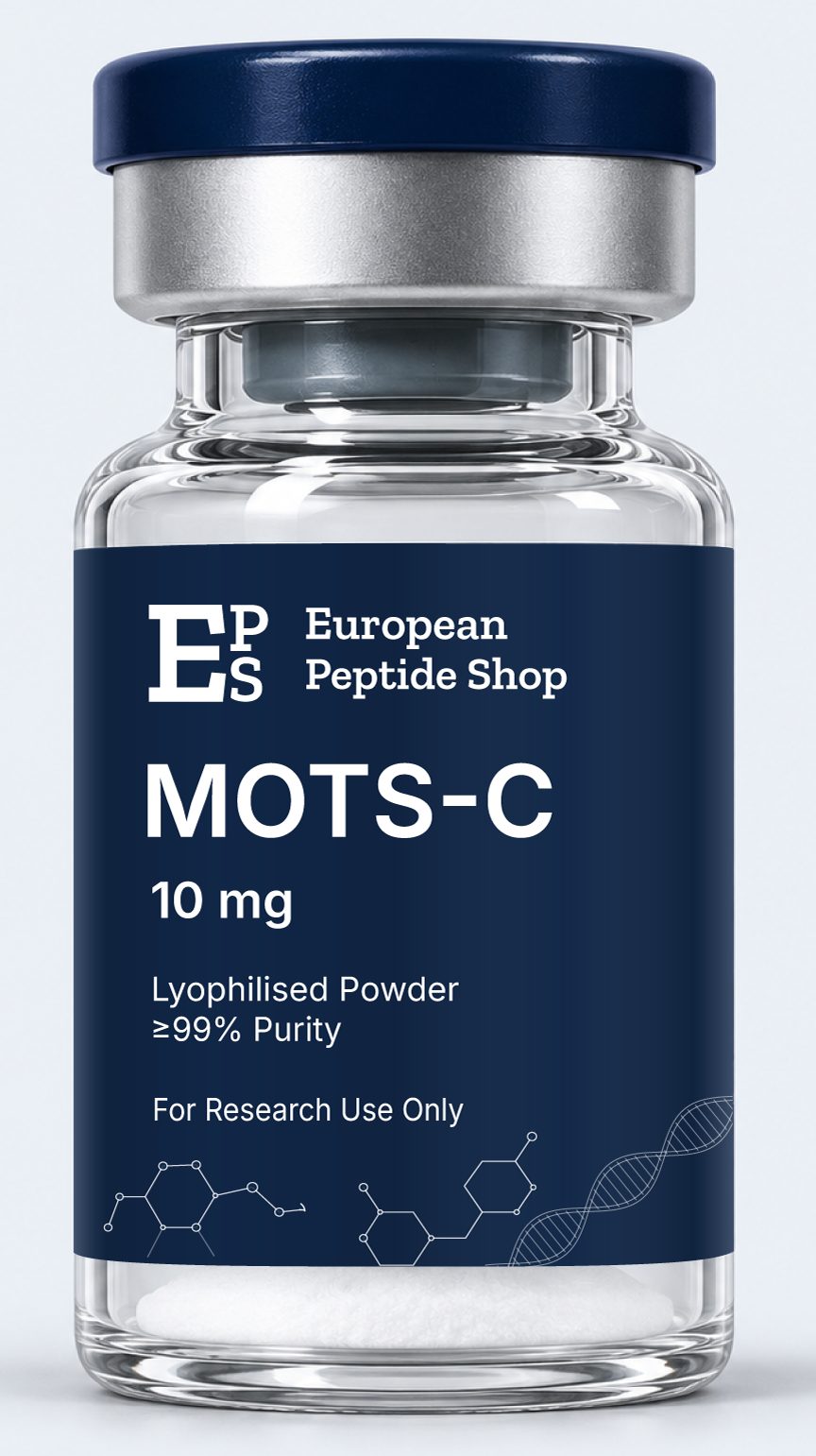
MOTS-C 10 mg, supplied as lyophilised powder in a sealed, labelled vial for in-vitro laboratory research.
⚠ For laboratory research only. Not for use in or on humans or animals.
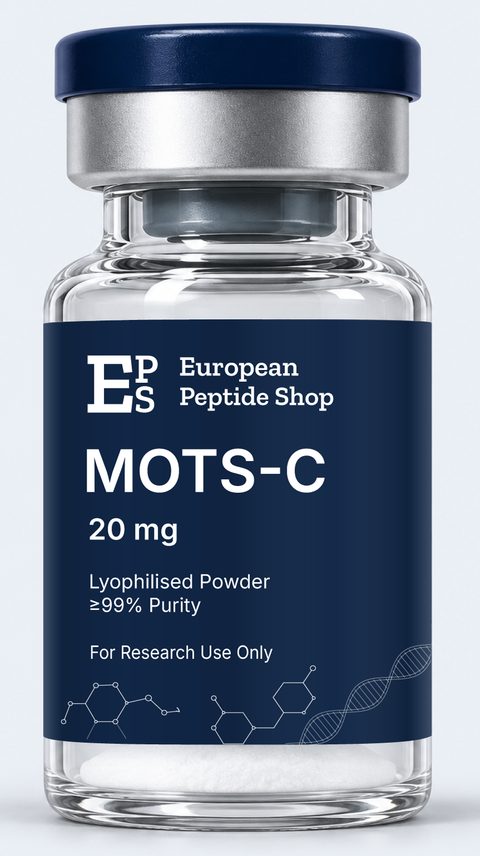
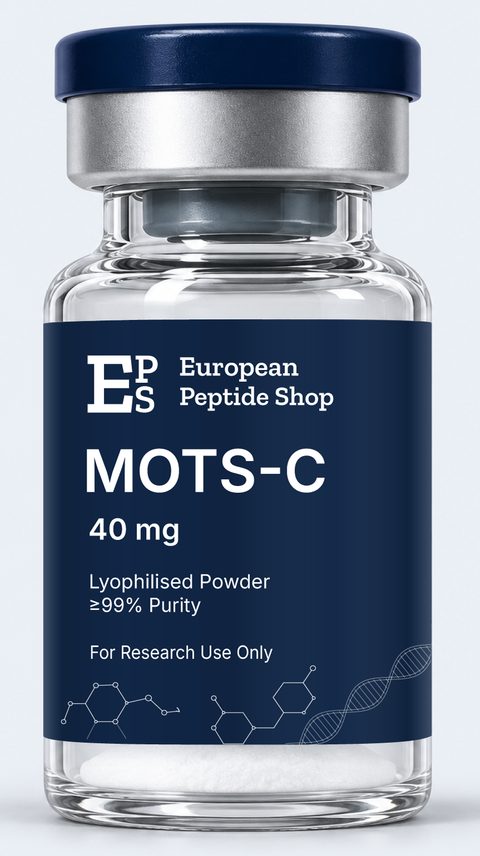
Images are packaging concepts, not photographed inventory.
These are common writing variants for MOTS-C, a mitochondrially encoded peptide. Verify the sequence, form and sample identifiers in the material documentation.
SS-31 is a different peptide. Sharing a mitochondrial research category does not make two materials interchangeable. Compare MOTS-C and SS-31.
MOTS-C is a peptide. NAD+ is a coenzyme, while NMN and NR are different molecules discussed as NAD precursors. A shared research topic does not establish the same chemistry.
10 mg identifies the nominal mass of material per vial. It does not specify a dose, a concentration in mg/mL or a measured-content result. Concentration additionally requires a defined final solution volume.
This page links Janoshik report #243391, an original source report naming Peptide Central UK as its client. The reported batch is 100289. This documents the submitted sample, not a verified connection to current EPS inventory. The COA library retains the original document and verification details.
Compare the compound, chemical form, vial amount, sample description and batch or lot number. Verify the report through the issuing laboratory using its identifier and key. Use the COA verification checklist.
The linked source report states 99.001% purity for its tested sample. A purity percentage does not quantify milligrams per vial or establish sterility and endotoxin results. Those require their own stated tests. The label's ordering specification is not a measured batch result.
Use the purchase section on this page for the current EPS listing status. A displayed sample price or preview basket does not establish live inventory or a confirmed order. Where the page says Price at launch, no selling price has been confirmed. Contact EPS for product enquiries.
Divide the current single-vial price by 10 for cost per labelled mg. Include shipping and compare the same chemical form and documentation. Other EPS formats: MOTS-C 20 mg, MOTS-C 40 mg. An unpriced size cannot establish a lowest-cost option.
Follow verified storage instructions for the exact supplied material and batch. Storage of dry powder and a prepared solution are separate questions. A general temperature range or preservative does not establish stability or an expiry. Read the storage and stability record guide.
Use a procedure validated for the exact chemical form and intended assay. Confirm solvent compatibility, concentration, container capacity and stability evidence; no universal diluent or shelf life is established here. Read the laboratory preparation guide. EPS does not provide administration or dosing instructions.
EPS delivery destinations, dispatch origin, rates and times must be confirmed in the shipping information before orders open. A country page or catalogue listing is not a delivery guarantee. Dispatch promises from another retailer do not apply to EPS.
Keep the packaging and label, photograph the damage and contact EPS with the order and batch details. Read the EPS returns and withdrawal information for the applicable process and rights. Another retailer's return deadlines do not define EPS terms.
MOTS-C 10 mg is listed for lawful in-vitro laboratory research as research material. It is not supplied for use in or on humans or animals. EPS does not provide dosing or self-administration guidance. Read the research use statement and assess the requirements that apply to the intended laboratory work.